Breast Reconstruction Surgery in Beverly Hills
Why Choose Dr. Tim Neavin for Your Breast Reconstruction
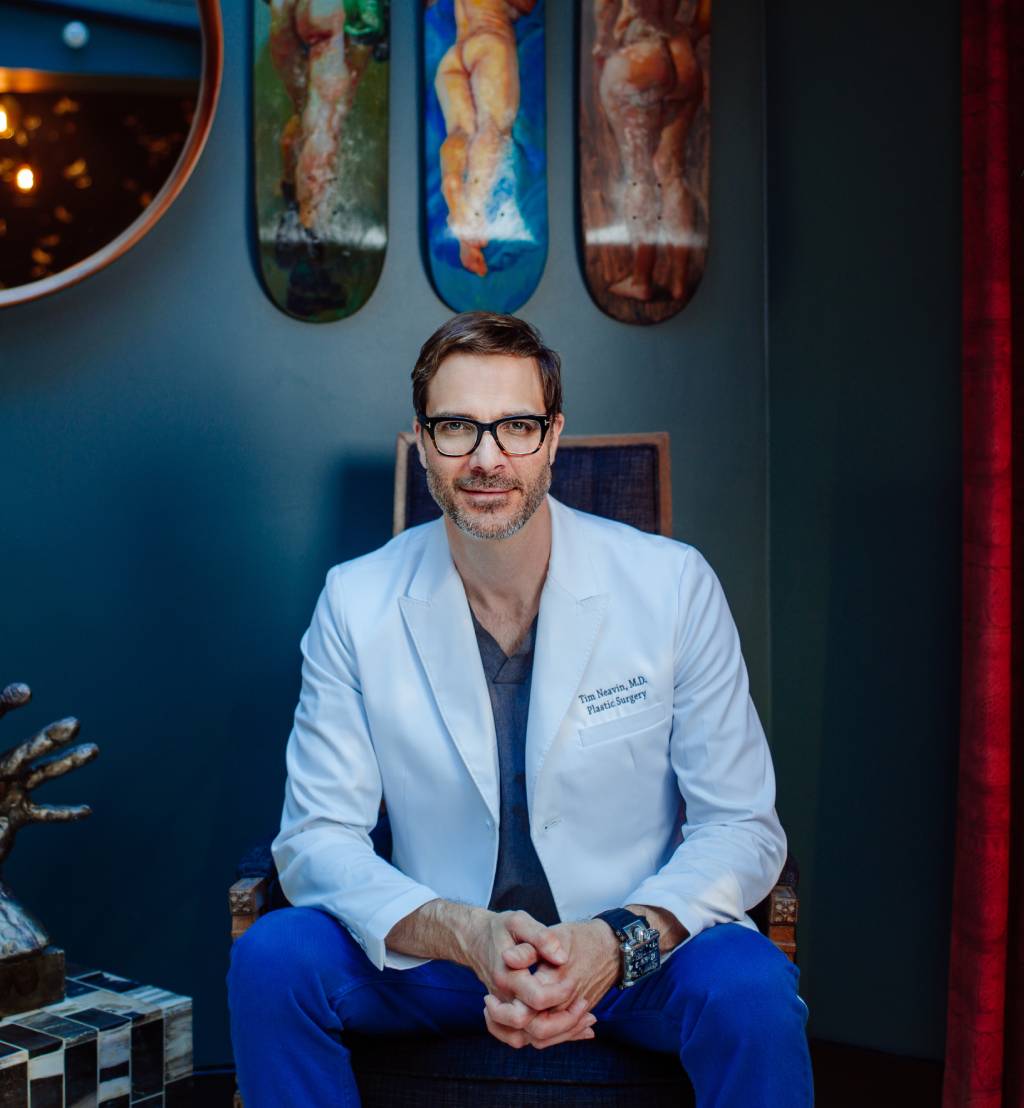
Breast reconstruction requires a surgeon who understands far more than aesthetics. It demands precision, experience, and a thoughtful approach to restoring shape, balance, and confidence after mastectomy, lumpectomy, or congenital breast differences. Dr. Tim Neavin brings more than 18 years of surgical expertise to breast reconstruction, combining advanced reconstructive training with a deep commitment to creating natural, symmetrical results that respect each patient’s medical journey.
Dr. Neavin works closely with oncologists and breast surgeons to determine the safest and most effective reconstruction plan, whether the timing is immediate or delayed. His experience with implant-based reconstruction, flap techniques, and fat grafting allows him to tailor the approach to a patient’s anatomy, health history, and long-term goals.
What patients appreciate most is his communication style. Every consultation includes honest, straightforward guidance on what can be achieved, how many stages may be required, and what recovery will look like. This transparency helps patients feel supported and fully informed through every step of a complex, personal process.
Above all, Dr. Neavin’s goal is to create results that look balanced and feel natural — not just in photographs, but in everyday life. His meticulous attention to symmetry, proportion, and scar placement is reflected in the strong feedback he receives from patients who trust him not only for reconstruction, but also for long-term revision and refinement procedures.
Understanding Breast Reconstruction
If you have had a mastectomy, lumpectomy, trauma or congenital breast differences, a breast reconstruction is an individualized procedure that s designed to restore your breast shape and symmetry. A breast reconstruction is not a one-size-fits-all operation. Every patient’s needs are different and unique. The goal is not to recreate what the patient had before, but to restore balance, proportions and a sense of wholeness that aligns with your body and goals.
Choosing to undergo a breast reconstruction can be done immediately at the time of the mastectomy or it can be delayed after chemotherapy, radiation and other stages of care. The right timing depends on your health, cancer treatment, and your personal preference. Dr. Neavin will review all of this in detail during your consultation.
As for your surgical options, there are several available, including: implant-based reconstruction, flap procedures (using your own tissue) and fat grafting for additional refinement.
In order to achieve the best outcome, breast reconstruction is often performed in stages. In some cases, patients require minor revision procedures in order to refine shape, improve symmetry, adjust volume or restore the nipple and areola. The gradual and measured process helps ensure that your final results are balanced, comfortable and harmonious with the rest of your body.
Finally, breast reconstruction is all about restoring your confidence. Your results should look natural both in and out of clothing. Dr. Neavin’s focus is providing proportional, soft, and realistic outcomes that support both physical healing and emotional well-being.
Types of Breast Reconstruction Available
A breast reconstruction is not a single procedure. There are actually several surgical options available that can accomplish a reconstruction; Dr. Neavin will assist you with choosing which procedure is best for you based on your anatomy, cancer treatment plan, and the result you want to achieve.
Below are the most common reconstruction techniques offered by Dr. Neavin.
Implant-Based Breast Reconstruction
The implant-based reconstruction is the most commonly performed after a mastectomy. Otherwise known as breast augmentation with implants, patients can choose between saline or silicone implants to restore breast shape and volume. This can be done in one or two stages, depending on your anatomy and whether expanders are needed.
Ideal for patients who:
- Prefer a shorter surgical time.
- Have not undergone radiation therapy
- Want a predictable, symmetrical shape.
- Do not want tissue harvested from another part of the body
Implant reconstruction can be combined with fat grafting for a more natural contour.
Autologous Tissue Reconstruction (Flap Procedures)
Autologous reconstruction uses your own tissue—typically from the abdomen, back, or thighs—to recreate the breast. These procedures include options such as the DIEP flap, TRAM flap, or latissimus dorsi flap.
Benefits of flap reconstruction include:
- A softer, more natural look and feel
- Long-term durability
- No risk of implant-related complications
- Better results for patients who have undergone radiation
Not every patient is a candidate, and flap options depend on available donor tissue and individual health factors.
Fat Grafting
Fat grafting is often used to improve symmetry, soften contours, and create a more natural transition between the reconstructed breast and the surrounding tissue. This technique can be performed alone for minor corrections or combined with implants or flap surgery to refine the final result.
It is particularly helpful for:
- Smoothing irregularities
- Enhancing upper pole fullness
- Improving softness and projection
- Correcting volume differences between breasts\
Nipple and Areola Reconstruction
The final stage of reconstruction often involves restoring the nipple and areola to create a more complete and natural-looking result. This can be done through:
- Local tissue reconstruction
- Tattoo pigmentation
- Areola resizing or shading techniques
This step is optional but can help create a sense of closure and wholeness for many patients.
Immediate vs. Delayed Breast Reconstruction
The timing of your breast reconstruction is a critical decision. Your choice of when you can have your breast reconstruction is going to be based on your cancer treatment plan, overall health, and personal preference. Your breast construction can be preformed immediately at the time of mastectomy or delayed until after additional treatments are completed. Either choice is valid and Dr. Neavin will help you choose a time that best aligns wth your medical needs and esthetical goals.
| Timing Option | Details |
|---|---|
| Immediate Reconstruction (Performed during mastectomy) |
|
| Delayed Reconstruction (Performed after cancer treatment) |
|
Which Option Is Right for You?
There is no single “best” timing. The right choice depends on:
- Whether radiation is expected
- Your overall health
- Your anatomy and tissue quality
- Personal preference
- Cancer stage and treatment plan
- Whether you prefer a single-stage or staged approach
Dr. Neavin works closely with your oncology team to ensure that your reconstruction plan supports both your medical care and long-term aesthetic goals.
Choosing the Right Breast Reconstruction for You
The best breast reconstruction for you is dependent on more than appearance alone. Your anatomy, medical history, cancer treatment plan, lifestyle, and long-term goals all play a central role in determining the safest and most natural-looking option.
During your consultation, Dr. Neavin performs a detailed evaluation that includes:
- The type of mastectomy or lumpectomy performed
- Whether radiation therapy is planned or already completed
- The quality and thickness of the remaining breast skin
- The amount of available donor tissue for flap procedures
- Your preferences regarding implants vs. autologous tissue
- Your tolerance for staged procedures or longer recovery
- Expected symmetry with the opposite breast
This information helps create a reconstruction plan that aligns with your body and your treatment journey—not a template or one-size-fits-all approach.
Some patients are excellent candidates for implant-based reconstruction, especially if radiation is not expected and they prefer a shorter surgical process. Others may benefit more from autologous tissue reconstruction, which can offer a softer, more natural feel and long-term durability. Fat grafting may also be recommended to improve symmetry or refine contour.
In many cases, reconstruction is performed in stages to achieve the best possible outcome. This can involve adjustments to shape, volume, symmetry, or nipple/areola reconstruction. Dr. Neavin reviews the entire process in advance so you understand what to expect at each step.
Most importantly, your reconstruction plan is created with your safety and well-being at the forefront. Dr. Neavin’s goal is to restore balance, confidence, and a natural contour that feels comfortable and true to you.
Schedule Consultation
To schedule your personal consultation with Dr. Neavin today, contact Artisan of Beauty at 310-858-8811 text 323-975-1287.
Principles of Natural, Balanced Breast Reconstruction
Breast reconstruction must restore more than shape — it should recreate balance, softness, and proportion that feel natural to your body. Dr. Neavin uses the following principles when designing every reconstructive plan:
- Proportion first — The reconstructed breast is shaped to complement your frame, not overwhelm it.
- Symmetry when possible — Fat grafting, implant adjustments, or minor revisions help create natural balance with the opposite breast.
- Soft, smooth contours — Techniques are chosen to allow a natural slope and avoid visible edges or step-offs.
- Respect for tissue quality — Radiation, scarring, and skin thickness guide technique choice for predictability and long-term stability.Minimal, thoughtful scarring — Incisions are placed along natural folds or lines typically hidden by bras.
- Long-term comfort and durability — The goal is a reconstruction that ages naturally and remains stable over time.
Procedure Overview: What to Expect on Surgery Day
Arrival & Preparation
Your surgical day begins with a warm, private check-in at our Beverly Hills facility. Our team reviews your medical history, finalizes measurements, and marks surgical landmarks that guide symmetry and shaping. You’ll meet with Dr. Neavin to confirm the surgical plan and answer any final questions. This step is designed to keep you calm, informed, and fully prepared.
Anesthesia
Breast reconstruction is performed under general anesthesia to keep you completely comfortable. A board-certified anesthesiologist monitors you throughout the entire procedure to ensure a safe and smooth experience.
During the Procedure
The surgical technique depends on the type of reconstruction you’re receiving: implant-based reconstruction, flap reconstruction, or a hybrid fat-grafting approach. Regardless of the method, Dr. Neavin focuses on:
- Establishing a natural breast shape and contour
- Creating symmetry with the opposite breast when possible
- Preserving or enhancing soft-tissue coverage
- Minimizing scarring through thoughtful incision placement
Each detail — from pocket creation to shaping — is performed with long-term stability and natural aesthetics in mind.
Privacy, Safety, and Comfort
Your experience is designed to be discreet and supported. Our accredited operating facility follows the highest surgical safety protocols, with a dedicated team overseeing every phase of your care. Patient dignity is a top priority, especially for women recovering from cancer treatment or mastectomy.
Recovery & Discharge
After surgery, you’ll wake in a quiet recovery suite where our nursing team monitors your pain control, comfort, and early healing. Most patients go home the same day, though certain flap-based procedures may require an overnight stay. You’ll receive detailed instructions on:
- How to care for incisions or drains
- Activity restrictions
- Showering and garment use
- Signs of normal healing vs. what requires a call
When to return for your follow-up visit Dr. Neavin remains closely involved throughout your healing process, ensuring your comfort, safety, and reconstruction results continue progressing as planned.
Recovery Timeline
| Recovery Stage | What to Expect |
|---|---|
| Days 1–3 |
|
| Week 1 |
|
| Weeks 2–4 |
|
| Months 2–3 |
|
| Months 6–12 |
|
| Long-Term |
|
Risks & Safety
Breast reconstruction is a deeply meaningful procedure, and safety is central to every step. While most patients heal well, it’s important to understand potential risks so you can make an informed decision and feel prepared throughout your recovery.
General Surgical Risks
These risks apply to most major surgeries and are typically low when performed by a board-certified plastic surgeon:
- Bleeding or hematoma
- Infection
- Delayed wound healing
- Adverse reaction to anesthesia
- Fluid accumulation (seroma)
- Changes in breast or nipple sensation
- Noticeable scarring
- Asymmetry as swelling resolves
Dr. Neavin takes extensive measures before, during, and after surgery to minimize these risks.
Procedure-Specific Risks
Implant-Based Reconstruction
Implant reconstruction is extremely common and carries a distinct set of risks:
- Capsular contracture (hardening of scar tissue around the implant)
- Implant rupture or leak
- Implant malposition or displacement
- Wrinkling or rippling, especially in thinner patients
- Need for future revision procedures
- Rare risk of BIA-ALCL (associated with certain textured implants; smooth implants preferred)
Flap Reconstruction (DIEP, TRAM, Latissimus, etc.)
Because these procedures use your own tissue, they have their own unique considerations:
- Partial or full flap loss (interruption of blood supply; rare in experienced hands)
- Fat necrosis (firm nodules from fat healing irregularly)
- Donor-site scarring (abdomen, back, or thigh depending on the flap)
- Muscle weakness if the donor site uses muscle
- Longer recovery time compared to implants
Fat Grafting (When Used Alone or as an Adjunct)
Fat grafting is often used to refine shape or correct contour irregularities. Risks include:
- Fat resorption (some fat may not survive, requiring a second session)
- Oil cysts or firm nodules
- Irregular texture if healing varies
- Rare infection at injection sites
Nipple Reconstruction (When Performed)
Potential risks include:
- Loss of nipple projection over time
- Reduced sensation
- Partial healing issues at the surgical site
- Need for tattoo touch-ups for color refinement
How Dr. Neavin Prioritizes Safety
Dr. Neavin’s reconstruction approach is built on precision, planning, and long-term stability:
- Thorough preoperative evaluation to tailor the technique to your anatomy, cancer treatment history, and personal goals.
- Use of advanced microsurgical and aesthetic techniques to maximize symmetry and maintain soft, natural contours.
- Smooth implants only when implants are used, significantly lowering long-term risks.
- Meticulous incision placement to minimize visible scarring.
- Direct follow-up with Dr. Neavin, ensuring continuity of care throughout your recovery.
- Conservative, patient-first decision-making — always prioritizing safety over aggressive surgical choices.
His goal is to achieve beautiful, natural results while safeguarding your health at every step.
Before & After