

Benefits of Facial Fat Transfer
Permanent, Natural Results
Unlike fillers that dissolve over time, fat cells that survive the transfer become a permanent part of your face. The result looks and feels completely natural—because it's your own tissue.
Stem Cell Rejuvenation
Fat contains millions of stem cells that actively improve skin quality. Patients often notice improved texture, tone, and color in the treated areas—benefits fillers simply can't provide.
Facial Sculpting, Not Just Filling
With volumes up to 60cc or more, fat grafting allows Dr. Neavin to reshape and remodel your facial architecture—restoring cheekbones, defining jawlines, and recreating youthful contours.
No Risk of Allergic Reaction
Because the fat comes from your own body, there's zero risk of allergic reaction or rejection. It's the most biocompatible option for facial volume restoration.
Expected Results
Restored Youthful Volume
Hollowed cheeks, sunken temples, and under-eye depressions are filled with your own fat, recreating the fullness that defines a youthful face. You'll look like yourself—just years younger.
Improved Skin Quality
The stem cells within transferred fat actively rejuvenate your skin. Many patients notice smoother texture, improved tone, and a healthier glow in the months following their procedure.
Enhanced Facial Architecture
Fat grafting goes beyond filling, it sculpts. Dr. Neavin can strengthen cheekbones, define the jawline, and restore the heart-shaped facial structure associated with youth and beauty.


5-Star Experiences
After losing 40 lbs on Ozempic, my face looked gaunt and aged. Dr. Neavin immediately understood my concerns and recommended a tailored approach using fillers and skin tightening. The results were natural and gave me my confidence back. If you're a guy dealing with "Ozempic face," he's the one to see.
"I recently had the pleasure of undergoing a fat transfer procedure with Dr. Neavin, and I can confidently say that he did an impeccable job. From the moment I stepped into his clinic, I felt at ease, thanks to his warm personality and professionalism."
How Facial Fat Grafting Works
Facial fat grafting is a two-part process: harvesting fat from a donor site and strategically injecting it into the face. Every step—from extraction to injection—impacts fat cell survival, which is why technique and experience are critical to achieving lasting, natural results.
01 Fat Harvesting
02 Fat Processing
03 Strategic Injection
04 PRP Enhancement (Optional)
Candidates
Ideal Candidates
Facial fat grafting is ideal for men and women who want to restore lost volume, rejuvenate their appearance, or enhance their facial structure using their own natural tissue.You may be a good candidate if you:
- Have noticed hollowing in your cheeks, temples, or under-eye area
- Look tired or aged despite adequate rest
- Have lost facial fullness due to aging or weight loss (Ozempic Face)
- Want a permanent alternative to dermal fillers
- Desire facial sculpting to enhance cheekbones, jawline, or chin
- Have enough donor fat available (even thin patients typically qualify)
- Are in good overall health and have realistic expectations
Not Ideal Candidates
Facial fat grafting may not be the right choice for everyone. You may not be an ideal candidate if you:
- Want virtually no downtime, fillers may be a better option as fat grafting involves swelling that can last over a week
- Are uncomfortable with general anesthesia or have difficulty tolerating local anesthesia
- Have unrealistic expectations about results
- Are not prepared for the more involved process compared to injectable fillers
- Have significant skin laxity that would be better addressed with a facelift (though fat grafting is often combined with surgical procedures)
During your consultation, Dr. Neavin will evaluate your goals and anatomy to determine if fat grafting alone or in combination with other treatments is the best approach for you.
Volume Comparison: Fillers vs. Fat Grafting
See the dramatic difference in treatment volume—and understand why fat grafting can sculpt and transform while fillers only fill. You can see the full breakdown comparing both techniques and their advantages here
Dermal Fillers
Facial Fat Grafting
That's 25× More Volume
At 50cc, facial fat grafting delivers the equivalent of 50 syringes of filler—in a single procedure. This massive volume difference is why fat grafting can reshape facial architecture, not just fill lines.
Estimated Investment
Surgery Day Journey
Arrival & Preparation
Fat Harvesting
Processing & Injection
Comprehensive
Aftercare Support
Personalized Recovery Instructions
Scheduled Follow-Up Visits
Direct Access to Dr. Neavin
Healing Timeline
Every patient heals differently, but this timeline offers a general guide for your return to daily life.
Days 1–3: Initial Healing
Expect significant swelling and possible bruising in both the face and donor site. Keep your head elevated and rest as much as possible. Prescribed pain medication will manage any discomfort. Avoid touching or applying pressure to the treated areas. Cold compresses may help reduce swelling but should be used gently to avoid disrupting fat cells.
Days 4–7: Swelling Peaks, Then Subsides
Swelling typically peaks around day 3–4, then begins to improve. Bruising will start to fade, often shifting in color before resolving. Most patients feel comfortable moving around the house but should continue to avoid strenuous activity. You may notice your face looks overfilled—this is intentional over-correction and will settle.
Weeks 2–4: Returning to Normal
Most visible swelling and bruising resolves during this period. Many patients feel comfortable returning to work and social activities by week two, though some residual puffiness may remain. The donor site should feel nearly back to normal. Avoid direct sun exposure and follow all post-operative skincare instructions.
Months 1–6: Final Results Emerge
As swelling fully resolves and transferred fat cells establish blood supply, your final results take shape. You'll notice improved facial volume, contour, and skin quality. The surviving fat cells are now permanent. Most patients see their full outcome by month three, with continued skin improvements from stem cell activity for up to six months.
Safety & Potential Risks
Facial fat grafting is a safe, well-established procedure when performed by an experienced, board-certified plastic surgeon. Because the fat comes from your own body, there’s no risk of allergic reaction or rejection. Dr. Neavin prioritizes safety at every step, using meticulous techniques refined over thousands of procedures.
Important Considerations
Harvest Site Risks:
- Bruising and swelling – Common and temporary, typically resolving within 1-2 weeks
- Discomfort – Mild soreness at the donor site, managed with prescribed pain medication
- Contour irregularity – Rare, as fat is harvested from deep layers; using multiple donor sites in thin patients further minimizes this risk
- Infection – Exceptionally rare at the donor site
Recipient Site (Face) Risks:
- Bruising and swelling – Expected for the first 7–14 days; residual mild swelling may persist for several weeks
- Asymmetry – Minor asymmetry may occur as swelling resolves; touch-up sessions can address this if needed
- Lumps or irregularities – Very uncommon in experienced hands; proper cannula selection and injection depth virtually eliminate this risk
- Infection – Rare, as the face is highly vascular and heals quickly
- Fat absorption – Some fat cells will not survive the transfer; Dr. Neavin accounts for this with slight over-correction
Frequently Asked Questions
What is facial fat grafting?
How long do results last?
How much fat is needed for facial rejuvenation?
What's the difference between fat grafting and fillers?
Will the fat harvesting leave a dent or visible mark?
Why Choose Dr. Neavin for Your Facial Fat Grafting
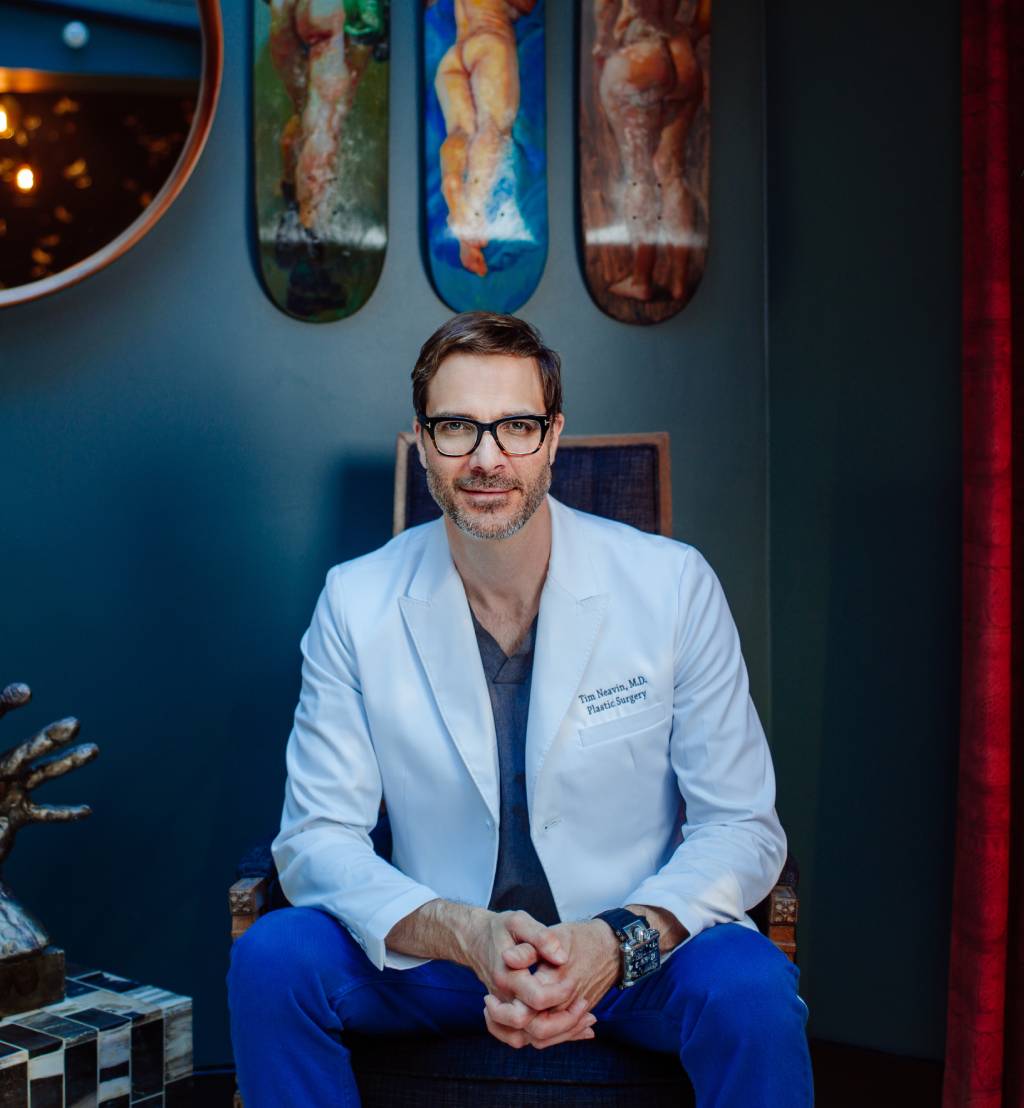
Dr. Tim Neavin is one of the foremost experts in facial fat grafting, having trained directly under Dr. Richard Ellenbogen—the pioneer of the technique—where he performed hundreds of fat transfer cases. He also studied fat cell research under Dr. Peter Rubin at the University of Pittsburgh, giving him a deep understanding of what makes fat cells survive and thrive.
With over 20 years of experience, Dr. Neavin has refined a meticulous approach that prioritizes fat cell viability at every step—from harvest to injection. His patients consistently achieve natural, lasting results because he treats fat grafting as facial sculpting, not just filling.
Dr. Neavin lectures nationally on injection techniques and instructs doctors worldwide on aesthetic ideals and facial rejuvenation. When it comes to fat transfer, few surgeons combine his level of scientific understanding with artistic precision.
Where We See Patients
Schedule Your Private Consultation
Start your journey with Dr. Neavin today.