
After performing thousands of facial rejuvenation procedures over my career, I’ve noticed patients often arrive at consultations confused about which approach will best address their concerns. The question I hear most frequently? “Dr. Neavin, should I choose fat transfer or dermal fillers?”
Let me share my perspective as someone who has dedicated years of my plastic surgery practice to perfecting facial fat grafting (also known as facial fat transfer) techniques, including my signature ReVface procedure. Understanding these two procedures can transform how you approach your aesthetic goals.
Understanding Your Facial Volume Restoration Options
Both fat grafting and dermal fillers serve the same fundamental purpose; they restore volume to areas that have lost fullness over time. However, the way each treatment achieves this goal differs dramatically, and those differences matter significantly for your results. Fat transfer is a more invasive procedure than having fillers injected. If you want to avoid surgery, dermal fillers might be a better option foryou.
Think of facial fat transfer as a long-term investment in your appearance. We’re using your own tissue, harvested from areas like your thighs or abdomen where excess fat exists, then carefully transferring it to areas experiencing volume loss. In contrast, facial fillers offer a more immediate, though temporary, solution using injectable materials like hyaluronic acid or poly l lactic acid. Fat transfer can also act as a dual-solution surgery. You’re taking away fat from harvest locations which pateints usually don’t want to have excess fat in (abs or thighs).
The Science Behind Facial Fat Grafting & Fat Transfer
What makes facial fat grafting particularly exciting from a plastic surgeon’s perspective is that we’re not just adding volume, we’re introducing living tissue. These transferred fat cells contain stem cells that integrate with your existing tissue, potentially stimulating collagen production and improving skin quality in ways dermal fillers cannot replicate.
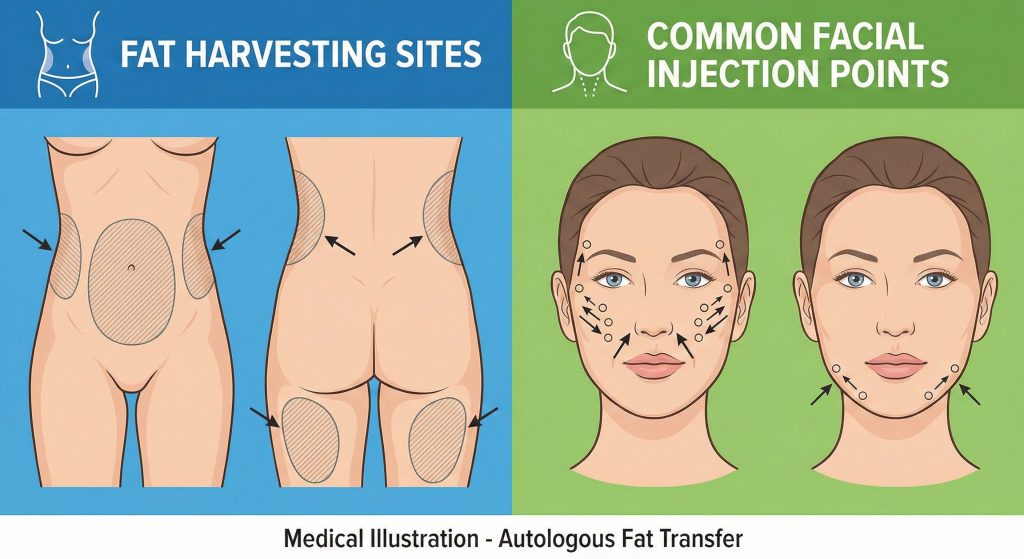
During facial fat transfer, I harvest fat cells through gentle liposuction, process them to concentrate the healthiest cells, then strategically inject them into specific facial areas. The fat that successfully establishes blood supply becomes permanent, creating natural, long-lasting fullness.
How Dermal Fillers Work
Dermal fillers represent cosmetic treatments that can be completed during a lunch break. Using local anaesthetic for comfort, I inject carefully selected fillers into target areas—whether that’s enhancing lips, softening deep wrinkles, or adding subtle volume to cheeks.
The appeal of injectable fillers lies in their immediate results and minimal recovery time. You walk out looking refreshed, with perhaps some minor swelling or bruising that resolves within days. However, this convenience comes with a trade-off: these non surgical treatments require repeated treatments as the body naturally metabolizes the filler material over months to years.
Fat Transfer vs Fillers: Key Differences
There is no preferred choice for patients between the two. It all depends on your goals. If you have lost volume and want a quick-fix, dermal fillers will be a great choice. If you have just had significant weight loss, or feel that your face looks aged, a fat graft procedure might be the better route.
Longevity and Permanence
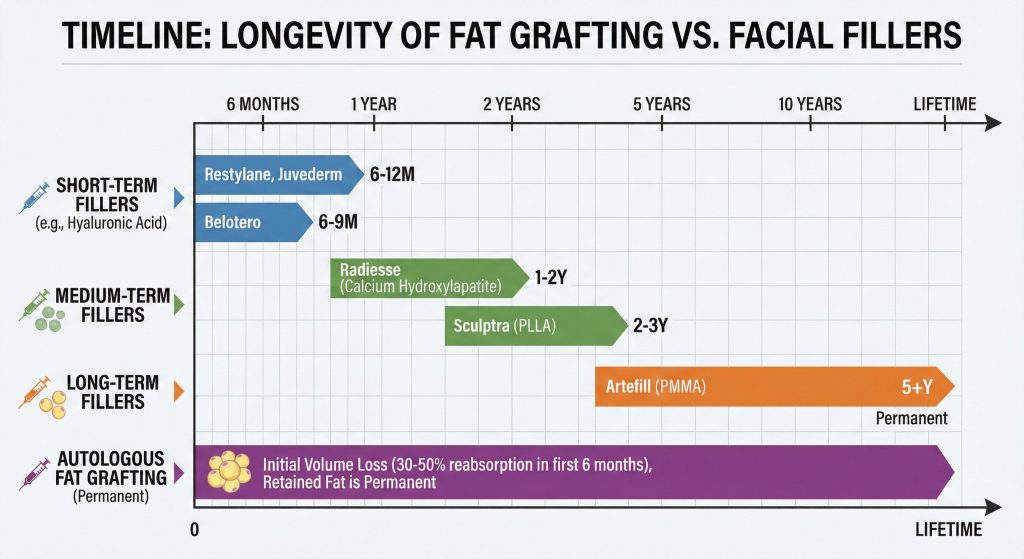
Fat grafting offers something unique—the potential for permanent results. Once transferred fat establishes its blood supply (typically 60-80% of what’s injected), those fat cells behave like any other fat in your body. They expand and contract naturally with weight fluctuations, maintaining that soft, natural appearance indefinitely.
Facial fillers, conversely, provide temporary enhancement. Most patients need touch-up injections every 6-18 months depending on the product used and individual metabolism.
Recovery Time and Downtime
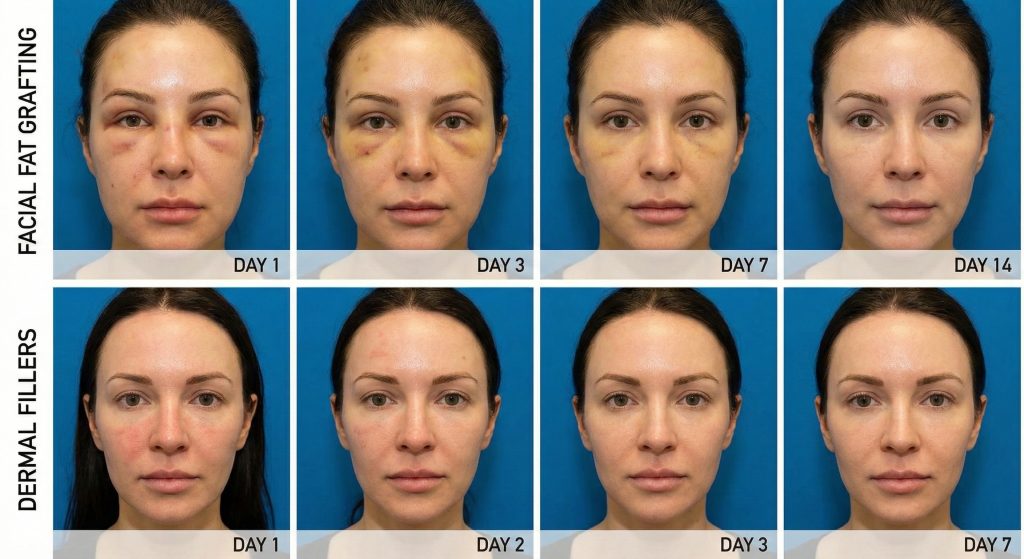
Here’s where these two procedures differ substantially. Fat transfer requires more initial downtime—expect about 7-10 days before you’re comfortable returning to social activities, with swelling persisting several weeks. The procedure itself is more invasive, involving both harvesting and injection sites.
Dermal filler treatments typically involve minimal recovery—most patients resume normal activities immediately, managing minor bruising with makeup if needed.
Natural Results and Appearance
Both techniques can achieve beautiful outcomes in skilled hands. Fat grafting excels at creating smooth, natural contours because we’re using your own fat—it moves, feels, and ages exactly like surrounding tissue. The structural support it provides helps restore youthful facial architecture.
Quality dermal fillers also produce natural results, particularly when used conservatively. However, improper technique or overfilling can create an artificial appearance that announces “I had work done.”
Cost
Facial fat transfer is a more invasive procedure and is going to be more expensive than fillers. On the contrary, it’s going to be more of a long-term solution. So those wanting a more affordable approach will save money up-front with dermal fillers; however, you will also need to continue with injections to maintain the results. Dermal fillers allow you to enjoy your new look temporarily while fat grafting offers a more permanent solution through plastic surgery.
So what do I recommend? Well, it depends. Facial fat grafting is one of my favorite procedures because the change it offers is more of a long-term solution. Not only does it improve skin quality, it also uses your own fat to enhance your face. Ultimately, a consultation at one of my offices is the best initial step before committing to dermal fillers or surgery.
Collagen Production and Skin Quality Benefits from Fat Grafting
One of the most remarkable aspects of facial fat transfer is its impact on collagen production. Unlike dermal fillers, which simply fill space, transferred fat cells release growth factors that stimulate your body’s natural collagen synthesis. This means improved skin texture, elasticity, and overall quality—benefits that continue developing for months after your procedure.
The stem cells within facial fat actively communicate with surrounding tissue, triggering regenerative processes that can reverse some effects of aging at a cellular level. This is why many of my facial fat grafting patients report that their skin looks healthier and more radiant, not just fuller.
My Approach: Restoring Facial Volume with The ReVface Technique
I developed ReVface specifically to maximize the regenerative properties of facial fat while minimizing invasiveness. This combination technique uses both macro fat (standard fat grafting) and micronized versions of fat, which I call nanofat.
The micronized fat contains concentrated stem cells that improve skin tone, texture, and color—benefits that extend beyond simple volume restoration. We can combine these fat grafting techniques with strategic sutures, threads, and targeted volume removal in certain areas through buccal fat reduction.
ReVface represents my philosophy: balancing both addition and subtraction of volume to enhance your natural beauty. In some cases, we add volume to temples and cheeks. In others, we subtract through strategic contouring. The result? Significant changes with surprisingly little downtime for what patients might expect from plastic surgery.
Who Benefits Most from Each Approach
Fat transfer serves patients seeking comprehensive, lasting facial rejuvenation. It’s ideal if you:
- Have adequate donor fat available for harvesting
- Want permanent volume restoration
- Desire improvements in skin quality alongside volume enhancement
- Can accommodate the recovery period
Dermal fillers work beautifully for patients who:
- Want to test drive subtle changes before committing to more invasive procedures
- Need quick results for an upcoming event
- Prefer gradual treatment over time
- Have minimal volume loss requiring correction
Dermal Fillers Treatment Planning and Patient Satisfaction
In most cases, I don’t view these two options as strictly competitive. Sometimes facial fillers serve as an excellent complement to fat grafting, addressing specific wrinkles or fine-tuning results. Other patients begin with dermal fillers, then transition to fat transfer once they understand which areas benefit most from treatment.
The right approach depends entirely on your unique anatomy, aesthetic goals, aging patterns, and lifestyle. During consultation, I evaluate your facial structure, discuss your concerns, and create a customized plan—whether that involves one technique, a combination, or a phased approach over time.
Making Your Decision
Understanding the difference between fat transfer injections and dermal fillers empowers you to have meaningful conversations with your plastic surgeon about which technique aligns with your goals. Neither option is universally “better”—they’re different tools serving different purposes.
What matters most is working with a surgeon experienced in both procedures who can guide you toward the solution that naturally enhances your features while delivering lasting patient satisfaction.
If you’re curious whether fat transfer, dermal fillers, or my ReVface technique might be right for you, I invite you to schedule a consultation. Let’s discuss how we can restore your facial volume and help you look like the most refreshed, natural version of yourself.
Dr. Tim Neavin is a board-certified plastic surgeon and one of the leading fat grafting surgeons in the world. He has practices in both Beverly Hills and Santa Barbara.